Tasting Notes I recommend you purchase and co-taste these two very well-made gamays to clearly understand the different winemaking approaches. Sandstone was groomed to be an oak-aged version, while Whitty has been made in stainless steel. But both are excellent. And if you are going to taste them side-by-side I suggest you tune up with the “regular” very lively and juicy Gamay 2024. Sandstone is the barrel-aged gamay from 13th Street, whereas the Whitty Vineyard is all stainless steel. Sandstone shows deeper ruby-purple colour. The nose is soft, rich and complex with violet, darker raspberry-cherry fruit and subtle wood spice, resin and vanillin. The spice is immediately evident on the palate as well, with some alcohol heat (13%). It is medium weight, indeed hefty for gamay, with almost rich texture, yet also with the juicy acidity of the vintage, and some chippy tannin. The length is very good to excellent. Age it a year or two. The Whitty is estate-grown, bright, juicy and made without oak ageing. It pours bright, pale purple ruby. It shows a charming lifted, fresh and slightly candied nose of cran-raspberry/cherry fruit, red rose and vague peppery spice. It is light to medium bodied, smooth, loose and juicy, and pleasantly tart. Some alcohol warmth at 12.5%. The length is excellent.
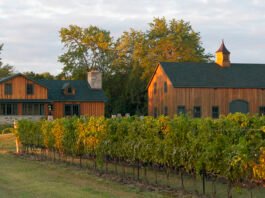
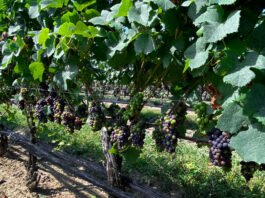
Backgrounder 13th Street is a well-established winery anchoring the Creek Shores appellation, along with neighbouring Creekside. It was one of the pioneering Niagara wineries, operated by wine enthusiasts until purchased by the Whitty family who had large vineyards in the region. Chablis-trained winemaker JP Colas became the winemaker, and the property became an ode to fine wine, culture, art and culinary exploration. As well as gamay, sparkling wine is a specialty. Sandstone was once a single-vineyard gamay but is now a barrel selection from vineyards in the Creek Shores sub-appellation. It is aged in new and seasoned French oak barrels for 12 months. Harvested late(ish) in mid to late October, the grapes were destemmed then cold soaked, followed by fermentation and maceration in stainless steel over 30 days. After pressing, the wine was transferred to French oak barrels. It was lightly fined and filtered. Whitty was destemmed and fermented in open top stainless-steel tanks with regular punching down to extract colour and structure. It was also lightly fined and filtered.