Not every post at Canada’s Best Wines will delve into a wine style, grape, region or winery. About one-third of the posts you receive will be collections of new releases that may not fit a theme, which is the case here. This better allows me to include, and you to peruse, a wider range of interesting wines from more wineries, grapes and places.
The title of this post categorizes this interesting group as best I can come up with for the moment. There are rarities, sentimental wines and surprising wines from unexpected places. At least half are under $40. With a reminder that they are wines that I would still rate as excellent or outstanding, and award a gold medal.
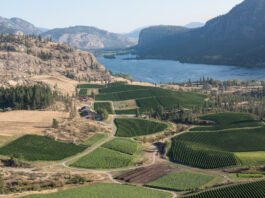
Regionally east to west, we touch down in the Annapolis Valley of Nova Scotia to sample a great sparkling wine, explore idiosyncratic chardonnays and pinot noirs from Prince Edward County, cross Lake Ontario to sample gamay, cabernet franc and a southern Rhone white blend from Niagara. We stop in the Lake Erie North Shore for an impressive cabernet sauvignon, then head west to try a legendary big red from Osoyoos in the south Okanagan, and finally into the northern reaches of B.C. in Lillooet for surprisingly good riesling
I have also done something unusual by reviewing two wines into one listing, under the Norman Hardie of Prince Edward County banner. He has literally just released a 2023 Chardonnay and 2023 Pinot Noir from his “home base” Greer Road vineyard. Some of the story is told in the Backgrounder, but it needs more space. In a multi-wine two-hour tasting with Norman in March, I became reacquainted with his vision, grasp and discipline, which have served his wines so well over the years.
Norman Hardie Digging Deeper and Branching Out
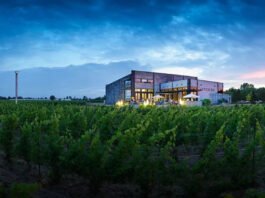
I have known Norman since the early ’90s when he took a college wine course I taught as he worked as a sommelier at the Four Seasons Hotel in Toronto. He left soon after to make wine in South Africa, then Burgundy and New Zealand before returning to Ontario in the early 2000s to put down roots on Greer Road in the Hillier district of Prince Edward County. As he developed his vineyard, he made wine at Casa-Dea across the road and produced the first vintage of Norman Hardie wine in 2003. I lived nearby from 2005 to 2010 and frequently tasted his wines with him, before I returned to Toronto.
My contact tailed off for the next 15 years, although I tasted his wines now and again. They always maintained their very elegant, detailed, linear styling. He introduced riesling, melon de Bourgogne and cabernet franc to flesh out his range for his very successful outdoor patio and pizza oven.
During this period, he also became very focused on marketing internationally, and his website claims his wines are “poured in more than 40 Michelin starred restaurants in Europe, the U.K. and Japan.” And he gathered some impressive accolades from international wine critics, like Wine Spectator’s Matt Kramer. “The Chardonnays emerging from Hardie’s small vineyard in Prince Edward County are laser-etched with acidity, minerality and the sort of originality that we all once thought only Burgundy could deliver,” Kramer wrote.
Post Covid, Hardie has re-caught my attention, with some evolutionary measures now in place, based on the maturity of his vines, his vision and confidence. The most interesting of these is expanding the portfolio of single-vineyard wines, both from estate vineyards in Prince Edward County and from purchased grapes in top sites on the Niagara Escarpment. At the March tasting, we went through seven chardonnays, seven pinot noirs, three cabernet francs and one gamay.
Hardie explained that he had been under pressure to go the single-vineyard Burgundy route years ago, but he didn’t believe his vines were old enough to express the differences that would make the exercise valuable to his consumers. Now he has three vineyards in PEC with individual bottlings: Greer Road, Singer and Johnson. And he is purchasing grapes from top single sites in Niagara, as well, including Wismer and Cuesta Vineyards.
Prince Edward County winemakers have been criticized for relying on supplemental Niagara grapes. Almost every winery has engaged in the practice. Yields in PEC are so low they are only marginally economical. PEC wineries steadfastly produce their own wines, but must go across the lake to Niagara for economy of scale.
Norm had an interesting perspective on the practice, agreeing that it has been critical to existence of PEC wineries. But he cited examples of other emerging regions around the world doing likewise — New Zealand’s Central Otago economically piggybacking on Marlborough, for example, and the Hemel-en-Aarde region of Walker Bay in South Africa hitched to next door Elgin.
The other interesting perspective he expressed during our tasting was how instrumental Lake Ontario is in the mitigation of the effects of climate change. This puts Ontario vineyards in an almost neutral sweet spot compared to many wine regions in the world. Quite simply, such a large body of water as Lake Ontario absorbs heat and distributes it slowly into the vineyards on its shores. While picking times in other northern regions like Burgundy are coming earlier, Ontario’s window has not changed. And, come to think of it, there are no other continental climate wine regions in the world outside of the Great Lakes sitting astride such large bodies of water.
I am not going to attempt to review all of Hardie’s wines in detail, but they may pop up in future posts that are based on themes. He has created a significant and consistently excellent portfolio, with some wines, like his Cuvee L blends of PEC and Niagara fruit, hitting outstanding levels of quality. The Jane & Oliver Block Pinot Noir 2020 from his Greer Road vineyard is a masterpiece. It is named for a couple who invested in his winery from the beginning.
Some Norman Hardie wines can be found in Ontario’s LCBO VINTAGES outlets and Newfoundland liquor board, but the whole range is available on-line and he ships to consumers across Canada.