May Day! The State of Direct-to-Consumer Shipping of Canadian Wine, Province by Province.
I had hoped almost a year ago in July 2025 that come May 2026 we would be toasting the arrival of complete freedom to ship and receive Canadian wine across all provincial borders. This month was the deadline set out by most provincial premiers to achieve at least a framework for DTC wine shipping – the poster child of the federally led movement to remove interprovincial trade barriers which would help strengthen Canada’s economy in the face of the Trump tariffs.
Well May 2026 is now June and there is still much work to be done. And it is complicated by, guess what?, some provinces being in no rush to relinquish their controls and perhaps some revenues.
I was able to get a province-by-province status report from WineGrowers Canada, the Ottawa-based wine industry association that lobbies government on matters of regulation and taxation. As I reported in the February 2026 edition of The News, this organization is adamantly in favour of DTC, indeed the complete overhaul and opening of the Canadian wine retail market.
So here is the situation with each province. The July 2025 MOU (Memorandum of Understanding) mentioned often below was the rallying document wherein most provinces expressed their intent to at allow reciprocal Direct to Consumer shipping.
We begin on a high note on the east coast with Nova Scotia, the most open-minded and far-sighted of all jurisdictions.
Nova Scotia – Has allowed incoming DTC from all provinces since the feds legalized it way back in 2015. It signed the July 2025 MOU, and in April 2026 signed a reciprocal agreement with Ontario, which some think will and should provide the framework for others to follow. Wineries in Nova Scotia and Ontario are now able to register for the program. Showing the way!
New Brunswick –Allows DTC. It signed the multi-province MOU in July 2025 then fast-tracked amendments to its legislation to be open to all provinces on August 1 2025. It can, apparently, be done. Go NB Go!
Prince Edward Island – Does not yet allow DTC. In May 2025 it developed a framework to allow DTC under the discretion of the its liquor board. It also signed an MOU with Ontario in June 2025 and the multi-province MOU in July 2025. But no enabling legislation is yet in place. PEI pokey!
Newfoundland & Labrador – Does not allow DTC. In December 2025 (half an hour out of synch as usual) it finally signed the multi-province that was signed by the other provinces six months earlier. It is said to be awaiting regulatory/ legislative amendments. C’mon mates.
Quebec – Does not allow DTC. It signed the July 2025 MOU but there is has been no apparent activity to amend its regulations or work with individual provinces. The loud sound of silence. I would love to see Quebec’s growing and increasingly vital wine industry benefit from DTC shipping to next door Ontario in particular, and vice versa with Ontario wine going freely into Quebec. Two important neighbouring terroirs and markets that could benefit hugely.
Ontario – only has reciprocal DTC with Nova Scotia so far. It signed the July 2025 MOU and has since passed legislation enabling DTC from other provinces, when they reciprocate. Now waiting for others to play ball. But B.C. already allows Ontario wine DTC, so why is Ontario not openly reciprocating, yet? Theories welcome.
Manitoba – Has allowed incoming DTC from any province since 2015. It signed a reciprocal MOU with Ontario in May 2025, and the multi-provincial MOU in July 2025. But it makes so little wine that reciprocation is almost a moot point, until perhaps beer and spirits come into the conversation.
Saskatchewan – Only allows DTC from British Columbia. It signed an MOU with Ontario in June 2025, and the multi-provincial MOU in July 2025, but again little wine other than fruit wine is produced here.
Alberta – Reciprocal DTC with British Columbia was freshly minted in April 2026. Alberta signed an MOU with Ontario in June 2025 and the multi-provincial MOU in July 2025. The most open market in Canada, and only one without a liquor board retailer, already has so much available at retail that DTC is less necessary, but B.C. wineries could certainly benefit.
British Columbia – Like Nova Scotia and Manitoba, B.C. has allowed incoming DTC from all provinces since 2015, and is now reciprocal with Alberta. It signed the July 2025 MOU. Like Ontario it is waiting for others for the green light to ship wines out. But again, a very large private retail system makes incoming DTC less important.
So, it is obvious that Direct to Consumer a work still in progress, and has lost some of the July 2025 energy in some quarters. The May 2026 happy ending is delayed, which is frustrating to those wanting this industry to flourish.
What Can the Feds Do About This?
Whenever I discuss this subject with innocent consumers, they always ask – why can’t the federal government just make it happen. Welcome to Canada, with so many complex issues around interprovincial trade and politics. But I believe the federal government is just letting this play out for now and not wanting to overstep. But for how long?
Shea Coulson, a Vancouver-based litigator with an expertise in the alcohol regulation, has thoughts on the matter, that he presented to the AIDV wine law conference held in Toronto in April. He doesn’t believe that the federal government should stand by and watch the provinces dither. And I sense that Canadians are in no mood for this either.
He suggests that there are ways Ottawa could move this along, with either carrot or stick approaches. The stick is that the federal government created the provincial alcohol regulatory environment at the end of Prohibition in the 1930s, and theoretically has the constitutional ability to undo it, as complicated as that may be. I really like this thinking!
The carrot would be offering financial incentives or other trade-offs to the provinces to replace what they might feel will be lost revenues to (and control of) their liquor boards. Although some at the conference think the provinces are over-estimating how much revenue they would actually lose.
I am not a lawyer, or an accountant, and not equipped to argue in the weeds point by point on this issue. But I very clearly sense what consumers want and expect of their governments. Action!
Deloitte Report: Canadian Wine is a $10.1B Economic Growth Engine
In a matter very much related to the article above, this Deloitte ‘White Paper’ (what other colour is there?) continues to make the case for the breakdown of interprovincial barriers. I have largely done a cut and paste of a press release from WineGrowers Canada, who commissioned international accounting powerhouse Deloitte to prepare a report on economic impact of the Canadian wine industry. I have edited some of the flourishes, like use of sound bite phrases like ‘super-clusters’, and tried to hone in on key messages.
The in-depth report by Deloitte finds that Canada’s wine industry contributes $10.1 billion to GDP and supports nearly 100,000 jobs annually, underscoring its role as a driver of rural economic development, investment, and long-term growth.
It examines the combined impact of Canada’s six grape wine producing provinces: British Columbia, Ontario, Quebec, Nova Scotia, New Brunswick, and Prince Edward Island, and it provides a policy road map to unlocking nearly $4 billion in economic potential; guided by federal priorities on reducing internal trade barriers and rural development
“Wine is more than an agricultural product, it underpins a broad, place-based value chain that supports manufacturing, tourism, transportation, and cultural industries,” said Dan Paszkowski, President and CEO of WineGrowers Canada. “The Canadian wine sector also generates significant strategic spillovers, driving tourism, innovation, domestic and export sales, and sustained growth in rural communities across the country.”
The report estimates that the wine industry directly contributes $3.2 billion to GDP, with an additional $6.9 billion generated through interconnected sectors, reinforcing its role as a stable, high value contributor to the Canadian economy.
The report goes on to say that “despite strong performance and steady growth over the past decade, Canada continues to lag leading wine producing countries that benefit from coordinated government industry strategies, long term market development programs, and fewer internal trade barriers”
The white paper identifies four broad policy areas where targeted government action could accelerate growth:
-Domestic and international market development
-Federal leadership in economic development coordination
-Enhancing sector competitiveness and investment conditions
-Capital investment and sustainability programs
The study also highlights the opportunity presented by interprovincial trade reform. If Canadian wines were to reach a 51 percent domestic wine sales market share, the sector’s total annual GDP contribution could increase by $3.6 billion.
Download the report here https://www.winegrowerscanada.ca/wpcontent/uploads/2026/05/DELOIT1.pdf
Tidal Bay 2025s Launched in Halifax May 30
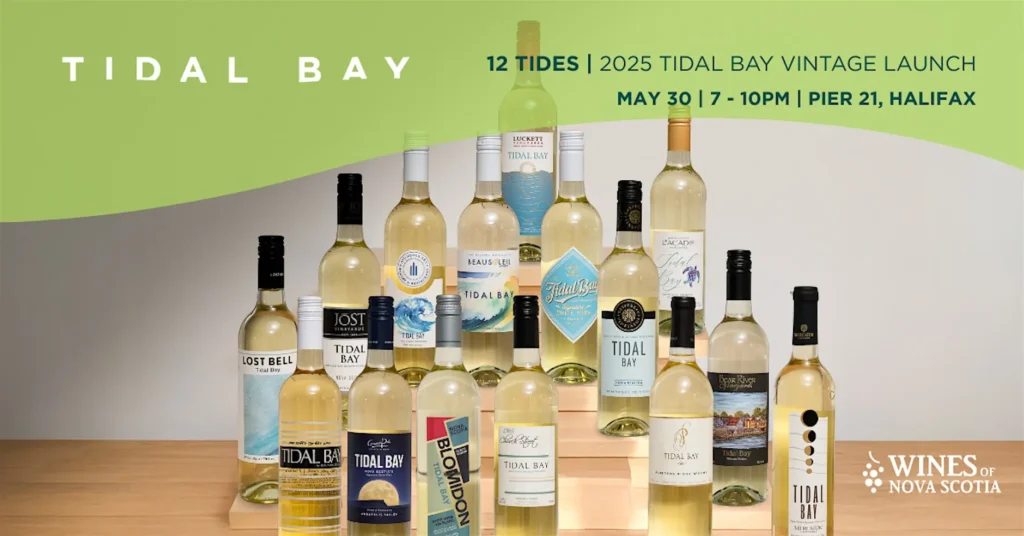
Fans of Nova Scotia’s signature wine shouldn’t miss the first pouring of the Tidal Bay 2025s at 12 Tides, a consumer tasting being held at the Canadian Museum of Immigration at Pier 21 (Kenneth C. Rowe Hall). It will run from 7 to 10pm. Guests will meet the winemakers and winery owners behind 16 Nova Scotia farm wineries as they pour the newest vintage of Tidal Bay, and share what makes this wine so reflective of the province’s coastal region. Tickets will include sixteen one-ounce tastings of Tidal Bays, as well as other wines. There will also be fresh local food pairings and live music. Purchase tickets for $92 at https://www.eventbrite.ca/e/12-tides-2025-tidal-bay-vintage-launch-tickets-1984626796172
For the many Canadians who may have not yet encountered Tidal Bay, it is a unique and clever concept-wine launched in 2012, thanks to an idea by Ontario-based consultant Peter Gamble who had been working with Nova Scotia wineries for several years. It is a light-bodied, very fresh white wine built to express the cooler maritime terroir of Nova Scotia. It must be 100% from Nova Scotia grapes, must be a maximum of 11% alcohol (which is key to the style), and be comprised 51% of four key varietals: L’Acadie Blanc, Vidal, Seyval Blanc and Geisenheim. Eleven other varieties can make up 49%.
Tickets Now Available for I4C in Niagara July 16 to 19

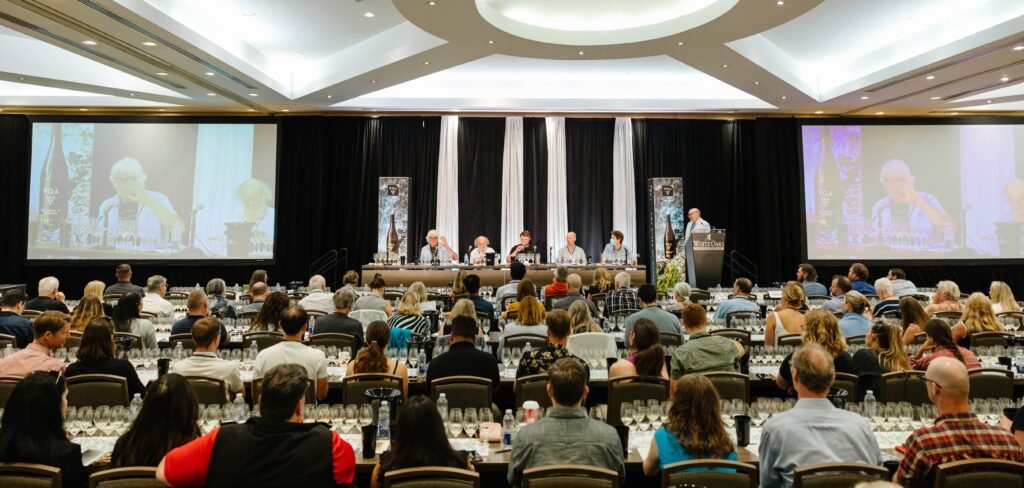
Canadian chardonnays take centre stage at the International Cool Climate Chardonnay Celebration (i4C) in Niagara July 16-19. It is the 16th edition of what has become a great wine weekend and the marquee wine event in Niagara. Over four days guests taste, learn and celebrate with winemakers, chefs and educators from across Canada and around the world, in an impressive series of tastings, dinners and winery experiences.
This year there are 38 Canadian wineries participating – 34 from Niagara, 3 from B.C., 1 from Nova Scotia – and six international wineries. I would hope that once Direct to Consumer shipping within Canada comes into play, participation from other provinces will increase. There has to be pay back on the travel investment for wineries to attend, which is why international participation has decreased recently.
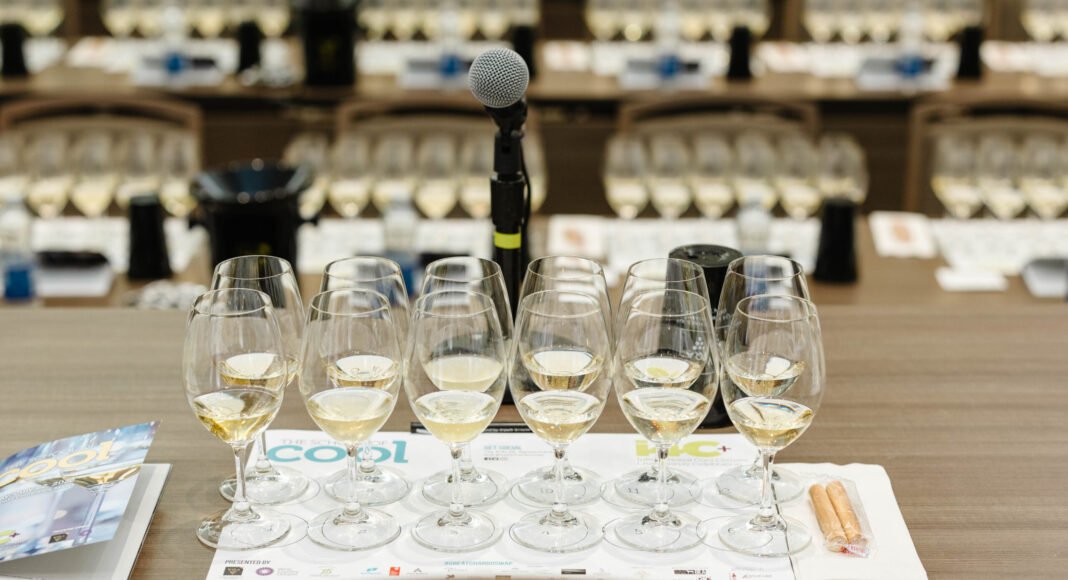
Still, it is a fine event. The celebration begins Thursday, July 16 with the School of Cool, i4C’s signature deep dive into the world of cool climate Chardonnay – a series of panel discussions and tastings that I have always found very informative and entertaining. The topics for this year are not fully in place at this point but I look forward to keynote speaker Véronique Rivest, a long-time friend and one of Canada’s most respected sommeliers who took several national and international honours before opening the hugely successful Soif Wine Bar in Gatineau. The school day culminates with a tasting where the energy shifts from seminar to social and guests can connect with their fellow classmates.
There are individual winery programs Thursday evening and during the day Friday. In the evening Friday Night Flights returns to the Niagara District Airport. As the hangar doors open, guests enter a high-energy evening of tastings, music and food from a team of Canadian chefs. This year there will also be ‘The Great Canadian Blind Tasting’
After winery programs during the day Saturday the finale Vineyard World Tour Tasting and Dinner moves to a new home at Peller Estates in Niagara-on-the-Lake. Guests can take the grand tasting of the i4C portfolio, then dinner paired alongside i4C Chardonnays and cool climate reds. It is followed by the “Après Chardonnay” bar, with live music, premium VQA and international wines round out the night under the stars.
Prior to i4C Canada’s Best Wines will publish previews on some of the most memorable wines.
Tickets are now available for purchase. For full details and the latest updates, please visit https://coolchardonnay.org. and follow on social @coolchardonnay.