Please Subscribe to Unlock
Tawse Winery on the Niagara Escarpment celebrated its 25th anniversary in June 2026. Tawse is not the only important Canadian winery reaching this milestone in the mid 2020s. There are several others in Ontario and British Columbia deserving this attention and I will tell their stories in upcoming posts and reviews. I began with an article on B.C.’s Blue Mountain in February.
Twenty-five years hearkens back to what, to me, is the watershed era for premium quality Canadian wine — between 2000 and 2005 — when several very serious and quality-focused wineries emerged, with new levels of capital, confidence and know-how to raise the bar. Pioneers in both provinces from the late 70s and 80s had laid the groundwork, and scraped to show what could be done, and had to do the heavy lifting to create the market. But a handful of well-funded 2001 to 2005 wineries said, let’s go.
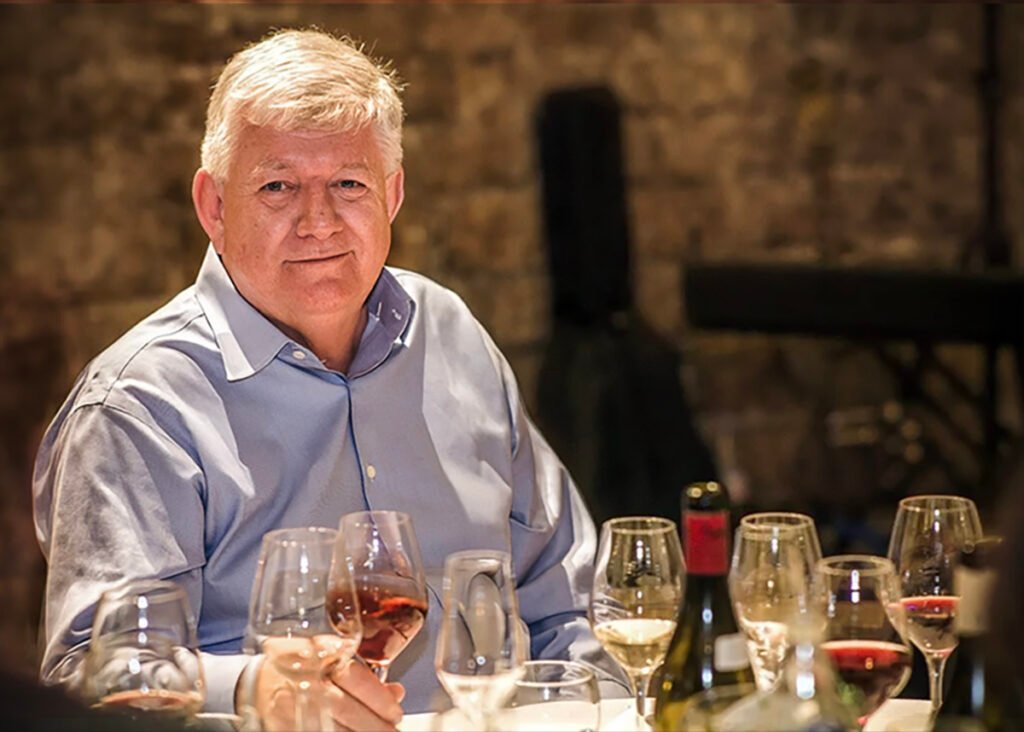
I have chosen to highlight Tawse because of a personal connection. I first met Moray Tawse when he attended an introductory wine course I was teaching in Toronto in the 1990s. There were a core group of students who went on to form a winetasting club that endures to this day, with Moray as a member. In fact, I was invited to its 25th anniversary tasting in January 2026.
Back then, Moray had not begun to think about opening a winery in Niagara, and was focused on wines of Burgundy, of which he is a true expert and aficionado. I did serve a handful of Ontario wines during the course, but I do not think he experienced an epiphany as a result. However, Niagara was at least on his radar as a grape growing region. And at some point, Niagara’s climatic and topographical connection to Burgundy became more apparent and Moray took the plunge.
He was also influenced by the results of the duo of viticulturalist/winemaker Deborah Paskus and the wine writer, a contemporary of mine, Stephen Temkin. This duo made head-turning chardonnays in the later 1990s. I wrote about them in The Globe and Mail at the time, and Deborah Paskus, who would go on to found Closson Chase in Prince Edward County, was hired as Tawse’s first winemaker.
The Early Years (2000 to 2005)
Moray Tawse is a wealthy financier, who could afford what lay ahead. I do not judge people by their wealth or lack thereof, but how they conduct themselves. Moray set out with a noble and logical mission to prove that the quality potential of Niagara lay in the ability to translate its existing terroir in the same way that Burgundy does.
Again, he was not the only one with this vision, but he had the means to prove it and purchased the Cherry Avenue vineyard property on the western boundary of what would become the Twenty Mile Bench sub-appellation. This was in 2000, but operations and construction began in 2001. Importantly, the site already contained mature chardonnay and riesling vines, including some of the oldest plantings in Niagara that are now the Robyn’s Block chardonnay and Carly’s Block riesling.
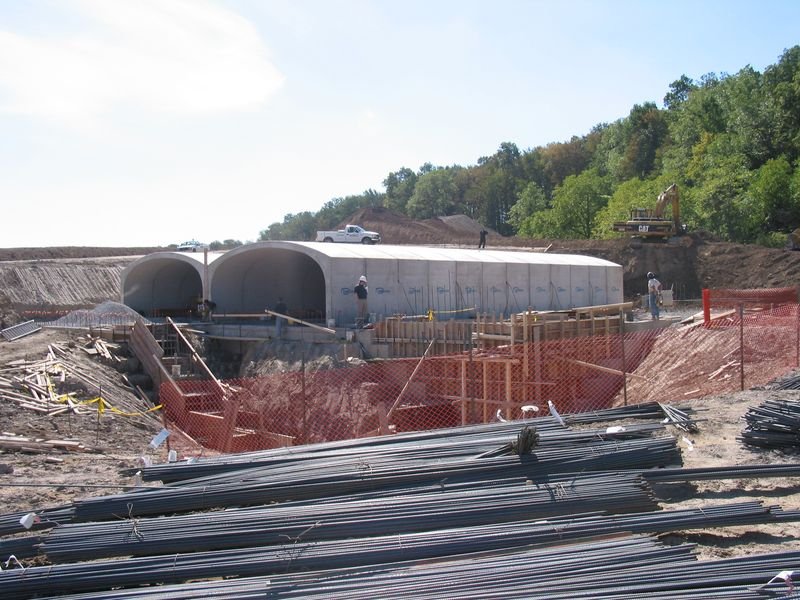
He was also determined to be a premium rather than a volume producer. His wines retailed at $30 to $50 wines, which was a novel idea at the time. (Premium pricing should still be the mantra of every winery in Canada, given our tiny global footprint.) Moray had purchased a great site, then invested in a six-level gravity-flow winery designed to minimize mechanical handling of grapes and wine. It was also built with sustainability in mind, incorporating geothermal heating and cooling and a wetland bio-filter system in the pond out front that helped reduced energy and water consumption. There were three underground barrel caves fitted into the slope. The winery opened in 2005. I was so impressed by several tastings I did in these cellars.
The Rise (2005 to 2012)
The sheer audacity, scope and focus of Tawse propelled it to local prominence quickly among the small but growing community of Niagara wine believers. So did the terroir-based focus on chardonnay, riesling, pinot noir and cabernet franc grown on Niagara Escarpment benchlands, which today still stand as the core four for Niagara. Was this as well defined 25 years ago? – I don’t think so.
A former carpenter and Brock University winemaking graduate named Paul Pender joined the team in 2005, and with the departure of Deborah Paskus who had moved over to Prince Edward County, he became head winemaker in 2006. At the same time the estate converted to organic and biodynamic farming, becoming one of Canada’s leading proponents of these practices, again not alone, but a time when it was considered risky business commercially, especially given Niagara’s humid, high disease-pressure environment. It was gutsy.
The winery’s reputation gathered steam during the late 2000s, then the doors blew off when it was named Winery of the Year at the WineAlign National Wine Awards of Canada in 2010. It was the first Ontario winery to achieve this since the founding of the Awards in 2001. But then it happened again in 2011 and again in 2012 – a three-peat! And again in 2016, establishing Tawse as one of the country’s most acclaimed producers. Only Mission Hill Family Estate Winery in B.C. to this day has won more titles, by one.
Expansion (2013 to 2019)
By 2010, what had begun as a small vineyard holding grew into a portfolio of more than 200 acres across Niagara Escarpment vineyards, including the home property, Cherry Avenue, along with Quarry Road and Limestone Vineyard sites (none too far removed but not contiguous). Our reviews below will dig into these sites, which remain the quality spine of Tawse.
At lower price points there was also expansion, with a line of entry-level varietal wines called Sketches that were often shiny, simple and very good value expressions. There was a tier of Growers Blend wines from purchased fruit that have proven honest and solid but variable and uneventful. And there were multi-vineyard blends of estate wines, certainly a step-up but still mid-tier, quality-wise. This pattern of expansion — and defrayal of original intent to meet the market — happens time and again in Ontario and in Canada as a whole.
Meanwhile, in 2015, Moray Tawse launched a second Niagara project, Redstone Winery, focused on Bordeaux varieties and wine-country hospitality. The restaurant remains the best winery dining experience in West Niagara, under the direction of Tawse general manager David Sider. The Redstone wines are based on the red clay ferrous soils that lie just below the escarpment apron in the Lincoln Lakeshore appellation. There is a focus on Bordeaux reds and syrah from the Redstone Vineyard, made in a tense, juicy style. Qualitatively, it has been success, with Redstone taking Winery of the Year in 2017 at the National Wine Awards of Canada.
But Moray’s predilection to Burgundy has remained throughout. In this era, he also expanded internationally through the Burgundy-based venture Marchand-Tawse, with renowned Quebec-born winemaker Pascal Marchand, who had also consulted at Tawse Winery in Niagara. It is no simple feat for a non-French citizen to establish a winery in the very crowded and patriarchal Burgundy wine scene.
The Recent Years (2020 to present)
Covid brought an especially disturbing and sad turn of events at Tawse. One evening in 2022, at his home on the shores Lake Erie winemaker Paul Pender answered his door to a troubled stranger. Soon after, Paul was dead. The shockwaves crashed across the Niagara and Canadian winemaking communities. I can’t think of a winemaker who was so widely respected and liked. I had tasted with him often and loved how inquisitive and engaged he was with those of us who analytically tasted the fruits of his labours. The Paul Pender Memorial Rising Star Award was established in his honour by the Ontario Wine Awards, the recipient recognized each year as a promising winemaker in Ontario.
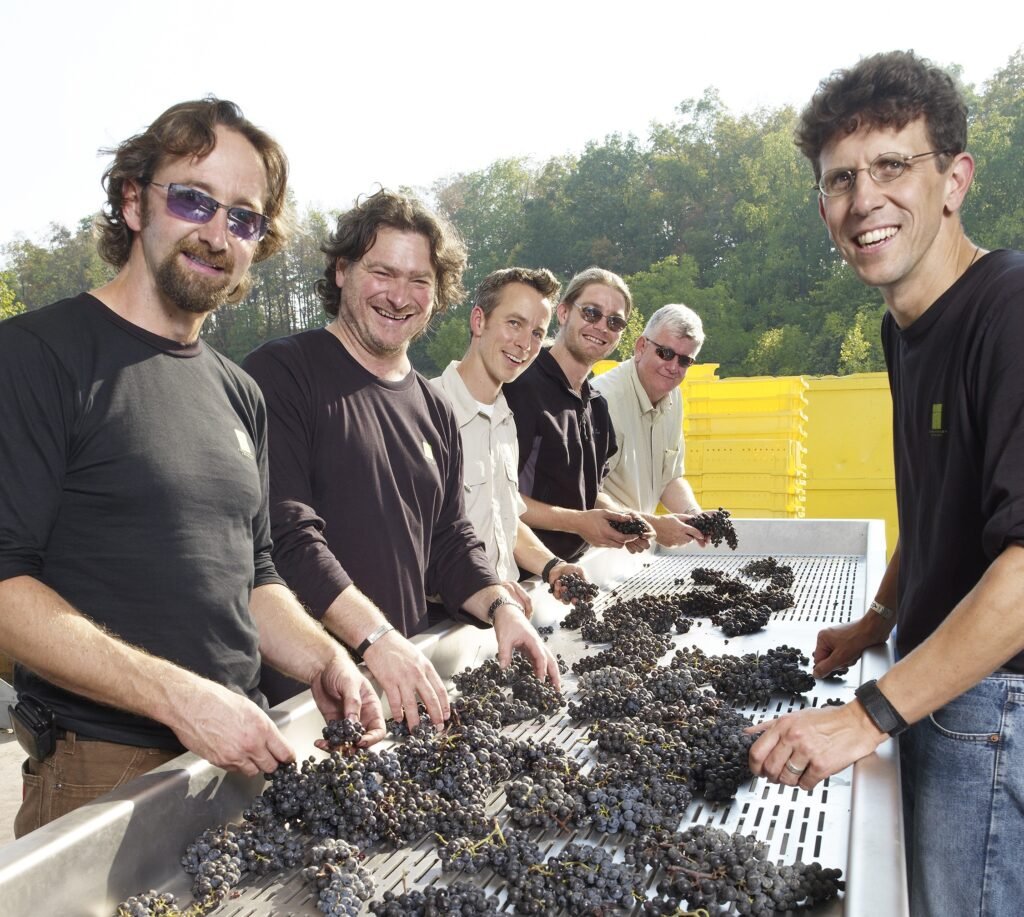
Jessica Otting, who had been working as assistant winemaker with Paul Pender, took over at Tawse. She landed her first job at a Niagara winery at 17, hired by South African emigree Marlize Beyers, who had been working at Hidden Bench and Flat Rock Cellars. Otting enrolled in the Niagara College’s Winery & Viticulture program in 2011 and, on graduation — like so many — went abroad to build her skills. This took her to Australia. But cool-climate winemaking was in her blood and she returned to Niagara. She was hired by Tawse soon after and worked her way up to assistant winemaker at Tawse and Redstone in 2018. A year later, her Tawse 2021 Limestone Riesling Spark earned 97 points and a Platinum Medal at the Decanter World Wine Awards.
She matter-of-factly claims that she has not done anything special or different in her tenure and is simply following established protocols and techniques. But she has overseen the installation of an optical sorter, and the expansion of the geothermal heating and cooling system. And, under her watch, Tawse has officially been certified as a sustainable.
This is the right moment to introduce Augusta VanMuyen, who was hired as vineyard manager the same year. Hailing from Prince Edward County, she first worked in a vineyard at age 13. She, too, enrolled in the Niagara College program, and initially worked at Tawse for her practicum in 2009. Upon graduation she went to Germany and Nova Scotia. With vineyard experience under her belt, Augusta returned to Niagara and became assistant winemaker in 2013. But her heart was among the vines and, since 2018, she has managed the organic-certified vineyards. In 2025 she was named The Grape King (despite her gender) by the Ontario Grape Growers of Ontario.
The present moment at Tawse is best illustrated by the introduction of a new label design that is confident and classic, yet somehow understated. I think it really captures Tawse 25 years on.
The Single Vineyards Tasting
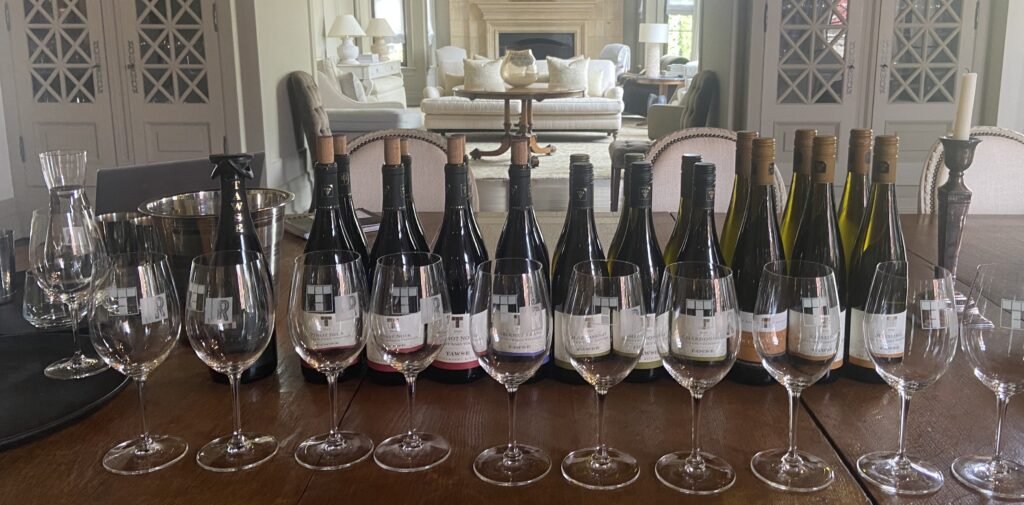
The mature estate single vineyards are providing the terrific quality that I experienced when I sat down to taste the complete range of wines that form the basis of the reviews below. In the Tasting Notes I delve into the vineyard sites.
I was mightily impressed by the breadth and depth of the quality in this premium tier. I spent a great deal of time not only with the initial tasting but in giving the wines their due in the two days that followed, with long aeration being a part of the exercise. My overall observation is that, in a very European way, Tawse wines are indeed structured for ageing. They can be rather inward in their youth. Not brooding and heavy but built on a firm acid and tannin structure that just doesn’t give up personality easily. Especially the pinot noirs. And then when they do, they are terrific.
For this tasting I was also offered matching 2017 library wines to compare to each the 2023s. Six years is a mid-point of evolution for most acid-riven Ontario wines. I describe some the 2017s in the accompanying reviews, but there was not one that I would consider fully mature. And that I would still be drinking and cellaring. At a subsequent lunch Moray Tawse poured a lovely, mature 2008 Lauritzen Vineyard Pinot Noir (from a no-longer producing site that was always a personal favourite), and a 2002 Estate Cabernet Franc that is holding on very well indeed at 24 years of age.